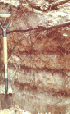
 Hooksan Soil Profile
PLYMOUTH COUNTY, MASSACHUSETTS SOIL SURVEY UPDATE
Hooksan Soils: Very deep, undulating and rolling, excessively drained soil formed in thick sandy eolian Holocene sediments adjoining beaches. Hooksan soils are on vegetated sand dunes along the coast.
Duneland: Un-vegetated upland areas adjacent to the ocean, subject to wind erosion and deposition.
Link
to Official Series Description
Hooksan Pedon Description 2361301
Beach Description 2361001
Beach Description 2370301
Map
Unit (s): 612C, 612D
Map
Phases:
Taxonomic
Classification: Mesic, uncoated, Typic Quartzipsamments.
Drainage
Class: Excessively drained.
Parent
Material: Holocene age eolian deposits (vegetated beach and
dune sands).
Permeability:
Very rapid throughout.
Available
Water Holding Capacity: Very low.
Soil
Reaction: Very strongly acid through neutral in the A horizon,
and strongly acid through mildly neutral in the C horizon.
Depth
to Bedrock: Greater than 65 inches.
Seasonal
High Watertable: Depth: greater than 5 feet.
Type: apparent.
Hydrologic
Group: A.
Hydric
Soil: No (Hooksan soils are mapped in protected coastal areas).
Flooding/Ponding
Potential: Frequency and Type: None.
Potential
Inclusions: Very poorly drained Ipswich, Pawcatuck, and
Matunuck soils. Poorly drained Wareham and Pipestone soils.
Unvegetated areas of beach and dune deposits.
Soil Suitability:
Agriculture: Poorly suited for most agricultural uses due to droughtiness and low fertility.
Woodland: Poorly suited for woodland productivity due to droughtiness
Development: Hooksan soils are mapped adjacent to coastal beaches and are subject to erosion from storm and tidal events.
614 – Hooksan, wet substratum.
This very deep, undulating and rolling, moderately well drained soil formed in thick sandy sediments adjoining tidal marshes and beaches. Hooksan soils are on vegetated sand dunes along the coast. Slopes range from 0 to 5 percent.
Hooksan soils typically have grayish-brown sand surface layers underlain by mottled pale yellow and light yellowish-brown sand.
Included in this soil map unit are areas of Berryland, Ipswich, Matunuck, Pawcatuck and Wareham soils. Also included are small, narrow areas of Beach and areas of unvegetated Duneland.
Soil Properties:
Permeability: very rapid throughout.
Available water capacity: very low.
Soil reaction: very strongly acid through neutral in the A horizon and from
strongly acid through mildly neutral in the C horizon.
Depth to bedrock: more than 60 inches.
Seasonal high water table: Depth: 1.5 to 6 feet
Type & Months: Apparent, Jan. to Dec.
Hydrologic group: B
Hydric soil: no
Capability subclass: VIIs
Flooding/Ponding Potential: Frequency & Type: none.
Duration & Months: none.
Most areas of this soil are in beachgrass. Some areas have summer cottages on them.
Suitability:
Crops:
This soil is unsuited to cultivated crops, hay or pasture due to droughtiness, low fertility and slopes.
Woodland:
This soil is poorly suited to woodland development. Trees are difficult to establish and grow slowly because of the droughtiness and low fertility of the soil. Due to the close proximity of these soils to the salt water, strong prevailing winds and salt spray severely hinder tree growth. Vegetation common to areas of this soil include beachgrass, poison ivy, beach plum, and bayberry.
Development:
This soil is generally unsuited for most nonagricultural uses due primarily to a very rapid permeability throughout the soil and the susceptibility of these areas to frequent storms resulting in erosion from wave and tidal action. Erosion is accelerated after the vegetative cover has been disturbed. The seasonal high water table makes this soil limited for on-site septic systems, mounded systems are typically needed to protect the groundwater and nearby wetlands.
Back to
Homepage
Back to
Legend
